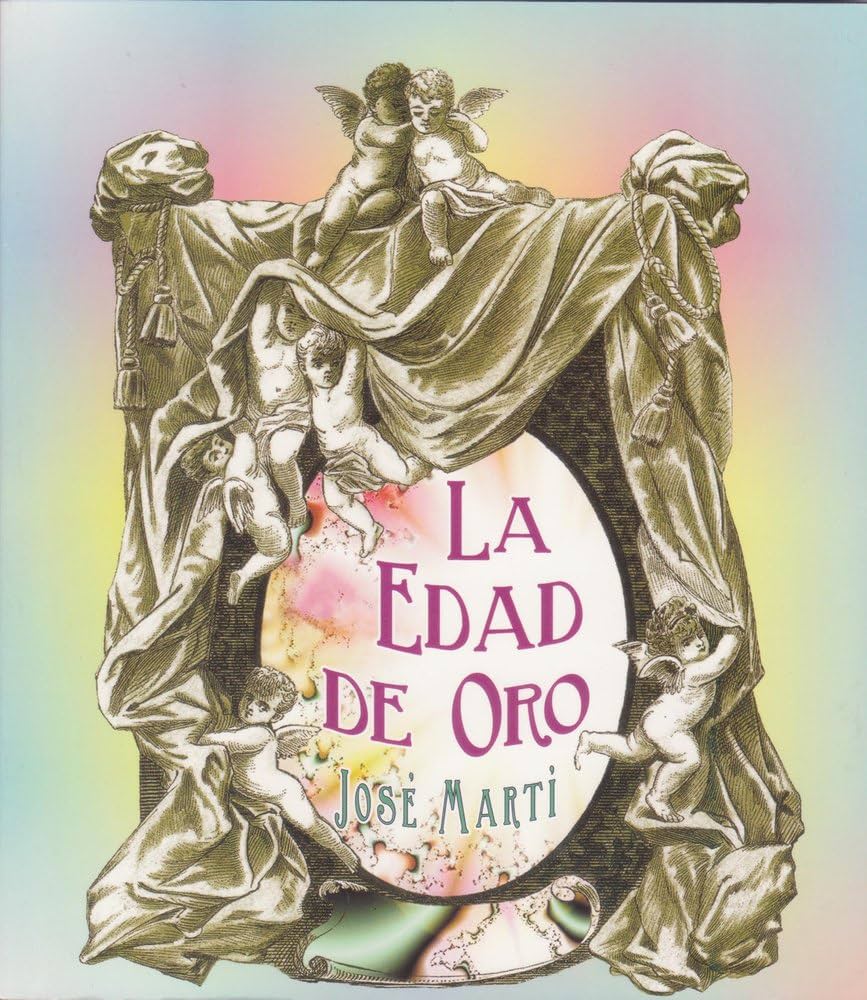
To the Children Who Read La Edad de Oro
We’re publishing La Edad de Oro so that children across the Americas can learn how people lived in the past, and how they live today—not just here, but in other parts of the world too. So they can discover how things are made—things of glass and iron, steam engines, suspension bridges, electric lights. So that when a child finds a colorful stone, they know where its color comes from, and what that color means. So they’ll know the famous books where people told stories about the great battles and beliefs of ancient civilizations.
We’re going to tell them about the amazing things that happen in workshops—places where reality is even stranger and more fascinating than magic stories. And it’s real magic, more beautiful than the kind you find in fairy tales. We’ll share what we know about the stars and the sky, about the depths of the oceans, and what lies beneath the ground. And we’ll tell stories that make you laugh, and stories about children—perfect for those days when you’ve studied a lot, or played so hard you just want to sit and rest.
We do this for children—because children know how to love. And because children are the hope of the world. We want them to love us too, and feel like we are something they carry in their hearts.
If a child wants to learn something they didn’t find in La Edad de Oro, they should write to us—as if we were old friends. And we’ll write them back. It doesn’t matter if the spelling isn’t perfect. What matters is that they want to learn.
And if the letter is really well written, we’ll publish it in our letters section, with the child’s name at the bottom—so everyone knows how bright and thoughtful they are. Children know much more than people think. And if you asked them to write what they know, they’d write wonderful things.
That’s why La Edad de Oro is going to hold a contest every six months. And the child who sends in the best piece—the one that truly feels like it came from their own heart and mind—will get a great prize: books, and ten copies of the issue where their writing is printed. The topics will be things from their own lives, things they know well—because you can only write well about something if you really understand it.
That’s the kind of people we want the children of the Americas to grow up to be—
people who speak their minds, and speak with clarity and heart. People who are brave and sincere.
Girls should learn just as much as boys—so they can talk to one another like real friends when they grow up. It’s a shame when a man has to leave his home just to find someone he can talk to, because the women around him only ever learned how to talk about distractions or small things. That’s why we’ll write in ways girls can enjoy and understand. Because La Edad de Oro has a magician living in it—and he says the souls of girls are like hummingbirds, fluttering curiously from flower to flower.
So we’ll tell them things in that spirit—as if the hummingbirds themselves could read. We’ll explain how thread is made, how violets grow, how needles are forged, how the grandmothers in Italy weave lace by hand. Girls can write to us too. They can send us their questions, and their writing, and enter the contest every six months.
And honestly—we think the girls might win!
What we want, more than anything, is for children to be happy—like the little siblings in the picture above the page. And if someday a child from the Americas meets us out there in the world, we hope they grab our hand tight, like they’re greeting an old friend, and say so everyone can hear:
“That man from La Edad de Oro—he was my friend.”
 Spanish
 English